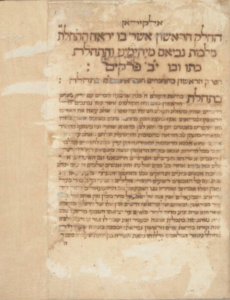
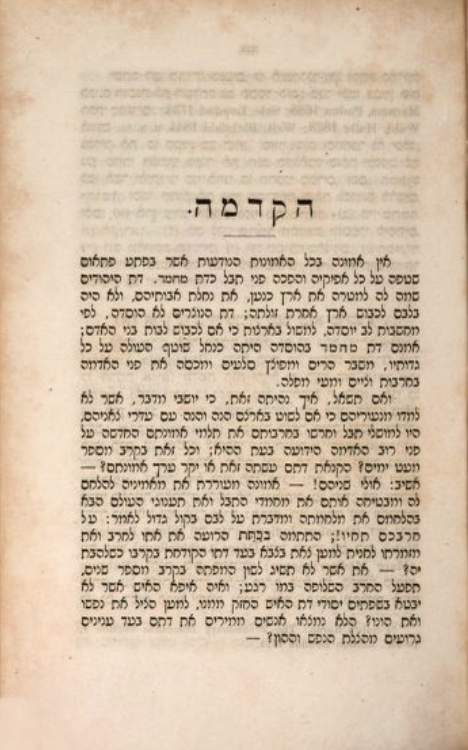
The final meeting of the six-year ERC Synergy Grant project The European Qur’an (EuQu) will take place at the Escuela de Estudios Árabes (EEA-CSIC) in Granada on 27–28 October 2025. On this occasion, I will share the outcomes of my research on premodern Hebrew translations of the Qur’an.
Focusing on seventeenth- and eighteenth-century translations produced from Italian and Dutch Christian versions, my work examines their circulation across cultural boundaries. It highlights the role of a diverse network of actors (Italian, Ashkenazi, Sephardi, Oriental, crypto-Jews, and converts) in the translation process.
By combining digital humanities tools with philology and historical criticism, this project fills a major historiographical gap. It offers new insights into pre-nineteenth-century Jewish history and the early development of Oriental studies among Central European Ashkenazim, and demonstrates that the history of the Qur’an in Europe is deeply intertwined with the broader inner-Jewish diversity.
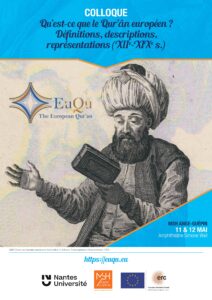 I will present a paper at the conference “What is the European Qur’ān? Definitions, Descriptions, Representations (12th–19th c.)” that will be held in Nantes on 11–12 May 2023. My talk, “Qur’anic Concepts through European Translations and Retranslations of the Qur’an: A Case Study,” explores how European translations shaped understandings of the Qur’an and contributed to changing representations of the Islamic scripture across different cultural and linguistic settings.