Article: « Jésus est-il mort volontairement selon le Coran? Une lecture historico-critique de Q 4:156-159 »

My latest article has been published in the new issue of BABELAO – Electronic Journal for Ancient and Oriental Studies. It is now available through UCLouvain’s open-access journal platform:

N. AFIF, “Jésus est-il mort volontairement selon le Coran? Une lecture historico-critique de Q 4:156-159”, BABELAO 14 (2025), pp. 107-130

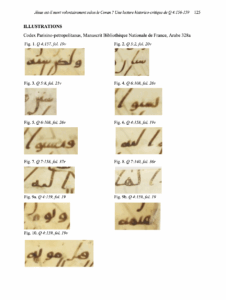
In this publication, I discuss new findings related to the Quranic passage on the crucifixion by using a method combining paleography, philology, intertextuality and corpus linguistics (quantitative analysis). As a result, I provide alternative readings that support a new hypothesis about the voluntary death of Jesus in the Quran.
 

Continue Reading

Galen: On Simple Drugs in Syriac Translation. Processed images and digital-born critical edition

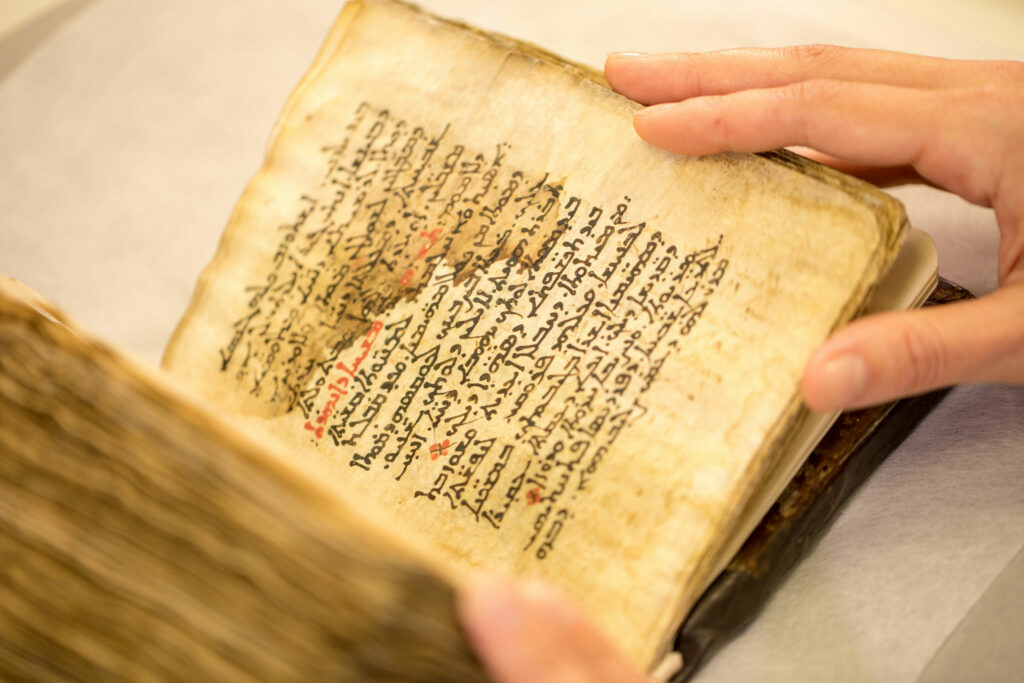
The digital outputs of the AHRC-funded project The Syriac Galen Palimpsest  based at the University of Manchester from 2015 to 2020 are now available. Our multidisciplinary team used cutting-edge imaging techniques to recover the erased text from a unique manuscript and restore a valuable witness to the scientific heritage of the Syriac Christian world.

The dataset, which is accessible in Open Access, includes a critical edition of Books 6–9 of Galen’s On Simple Drugs, presented in PDF, RTF, and Mellel formats, along with processed images of the manuscript. Further information on our editorial approach will be published in the forthcoming volume The Syriac Galen Palimpsest: A New Paradigm for Cross-Disciplinary Research (Proceedings of the British Academy), stemming from the project’s international British Academy Conference held in 2019. Consult the files on Figshare.

Continue Reading

‘Le Coran vu d’ailleurs’ : Catalogue of the Exhibition at the National Library of Tunisia

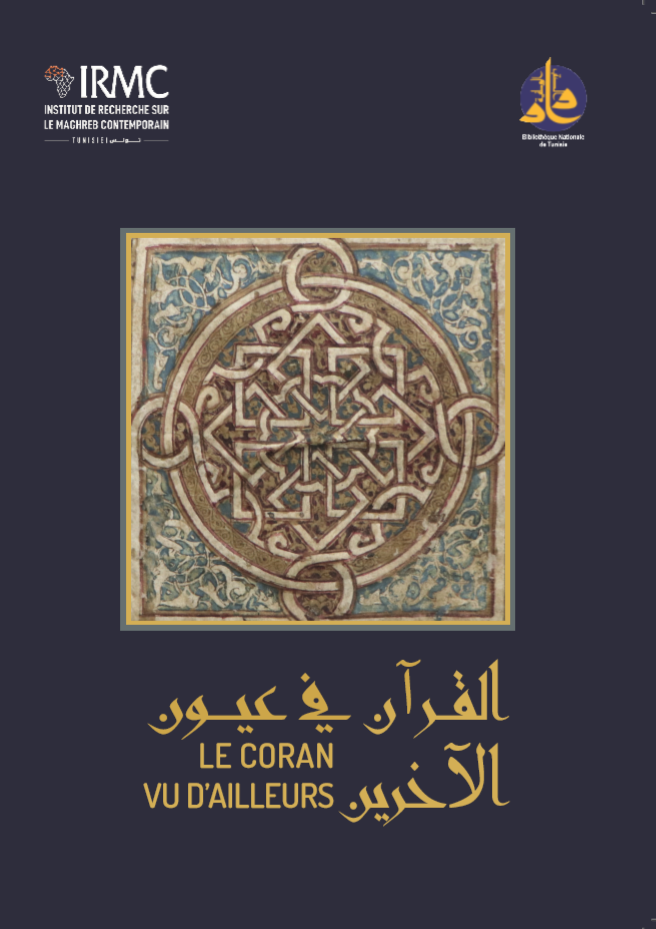
Published by the Institut de recherche sur le Maghreb contemporain, Le Coran vu d’ailleurs accompanied the exhibition held at the National Library of Tunisia from 15 February to 30 April 2025. Edited by: Katia Boissevain, anthropologist and Director of the IRMC; Khaled Kchir, historian and Director of the National Library of Tunisia (BNT); John Tolan, professor, University of Nantes; Naima Afif, postdoctoral researcher, University of Copenhagen; and Jan Loop, professor, University of Copenhagen.


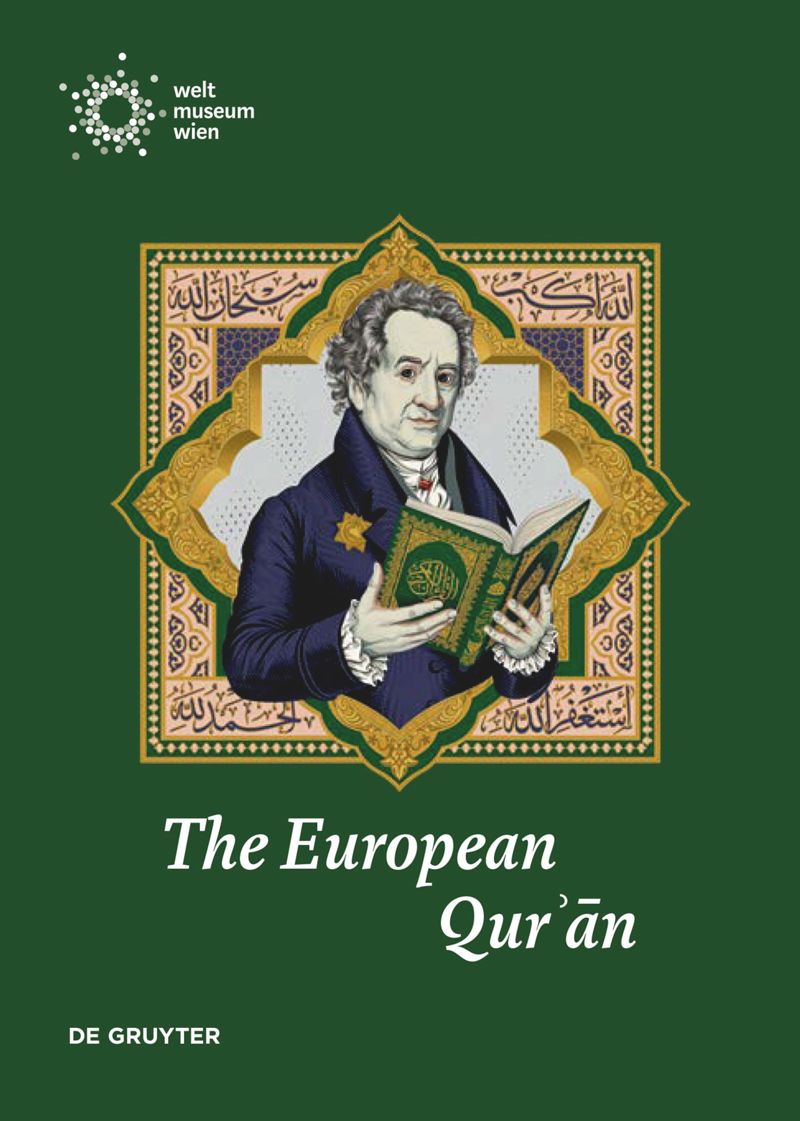
Couverture du catalogue Le Coran vu d’ailleurs, publié à l’occasion de l’exposition à la Bibliothèque nationale de Tunisie en 2025.

Continue Reading

New Paper in Translation Studies and Early Modern Retranslations of Canonical Texts: “The Hybridity of a Hebrew Retranslation of the Qur’an from Dutch by a Jewish Convert”

Hebrew Manuscript Library of Congress Naima AFIF study Postdoc researcher

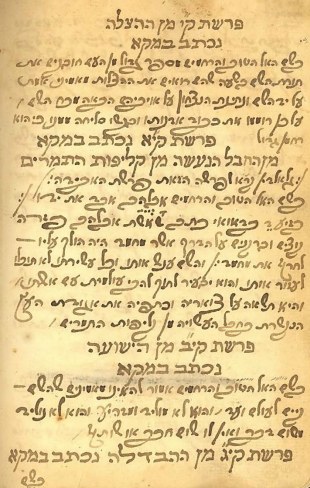
My contribution to the volume Retranslating the Bible and the Qur’an: Historical Approaches and Current Debates is accessible in Open Access. Edited by Pieter Boulogne, Marijke H. de Lang, and Joseph Verheyden, this publication brings together studies that highlight the complexity of retranslating canonical religious texts. My paper explores a double indirect Hebrew translation of the Qur’an from the eighteenth century by a Jewish convert to Christianity. It discusses how the translator’s identities are negotiated, articulated, and reconstructed through the process of retranslation.  Learn more about the book on the KULeuven website.

Continue Reading

New publication: « De Leipzig à Fès: une copie sépharade de la traduction hébraïque du Coran d’Hermann Reckendorf »

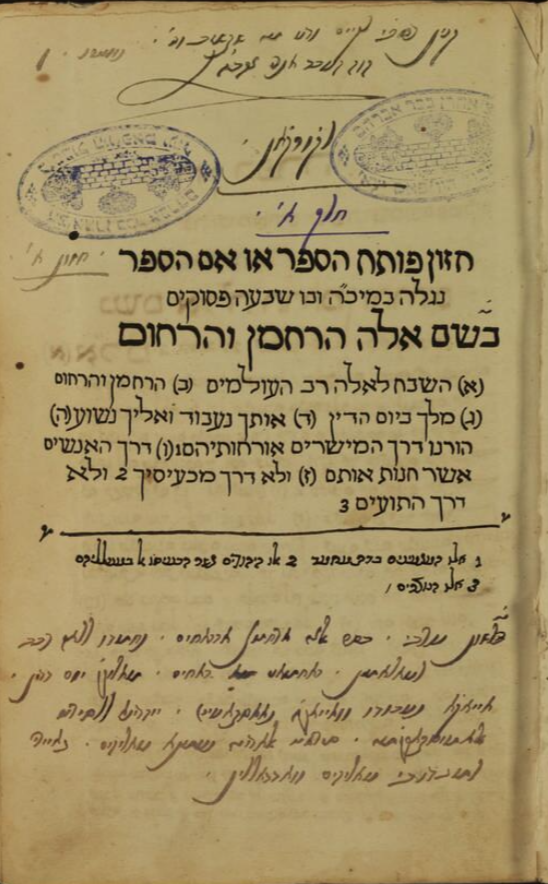
Jerusalem, National Library of Israel, Ms. Heb. 8° 6453. Sura 1 in Hebrew, with a transliteration of the Arabic text in Hebrew script.

The first Hebrew translation of the Qur’an directly from Arabic was produced by Hermann Reckendorf (1825–1875) in Germany during the Jewish Enlightenment.

While Reckendorf’s translation circulated primarily in Ashkenazi intellectual circles, it also survives in a remarkable manuscript copied in nineteenth-century Morocco. This article examines this unique Sephardic witness and explores how a European Hebrew translation of the Qur’an was transmitted in a North African Jewish context.

Read the publication in Open Acces.

Continue Reading